
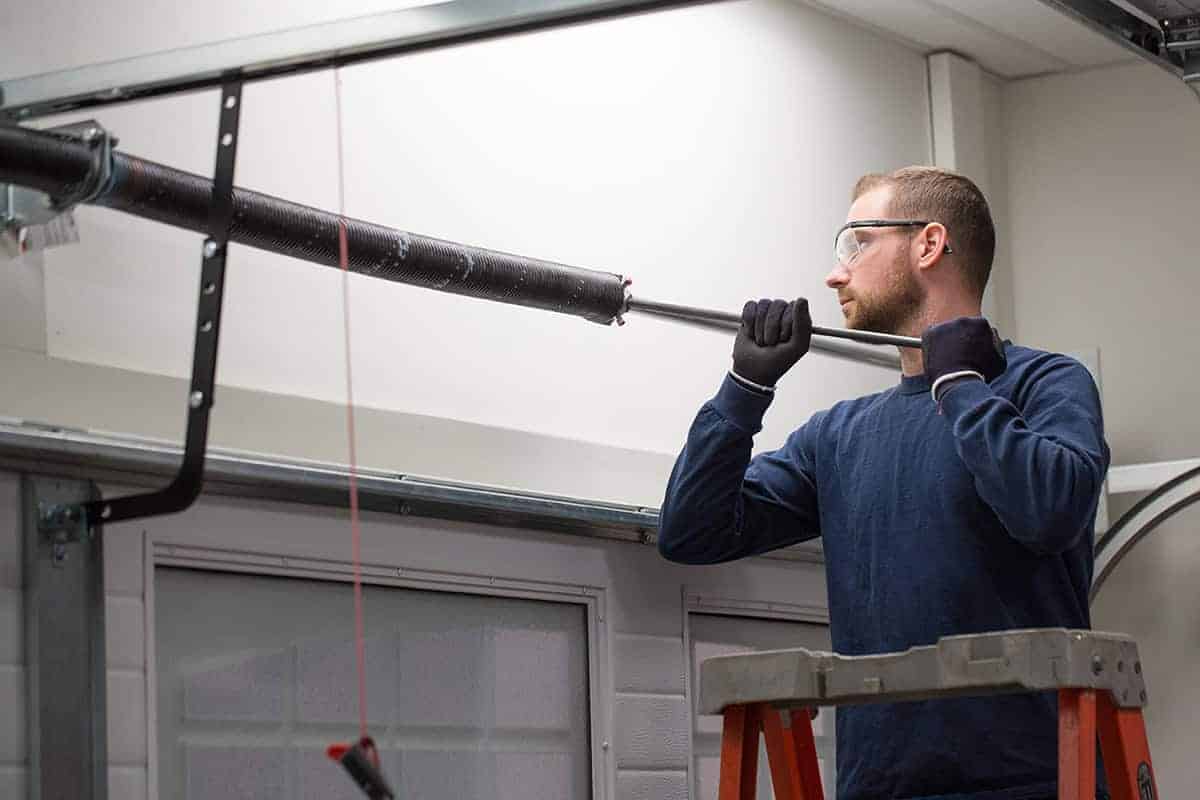
A garage door spring does most of the heavy lifting every time your door opens. When it weakens or breaks, the door may become dangerously heavy, move unevenly, or stop altogether. Catching the warning signs early protects both the opener and the people around the door.
Do not remove brackets, touch loose cables, or attempt to wind a torsion spring. These parts can hold enough force to cause severe injury.
1. You heard a loud bang from the garage
A torsion spring can release with a sharp bang when it breaks. Homeowners sometimes mistake the sound for something falling against the door. Look above the closed door from a safe distance. A visible gap in the coil often confirms a broken torsion spring.
2. The opener strains but the door barely moves
The opener guides the door; the spring system offsets most of its weight. Without adequate spring assistance, the opener may hum, stop, or lift the door only a few inches. Repeated attempts can damage the opener, so stop cycling it and schedule an inspection.
3. The top panel bends during opening
If the opener pulls while a spring is broken, the top section may bow inward. This is a sign that the system is lifting far more weight than it was designed to carry. Continuing to operate the door can turn a spring repair into panel and opener damage.
4. The door feels unusually heavy
A properly balanced door should not feel like its full physical weight. If the opener is disconnected and the door is extremely difficult to lift, the spring is not providing normal support. Only perform a balance check when the door is fully closed and no cable, track, or spring damage is visible.
5. The door moves unevenly or looks crooked
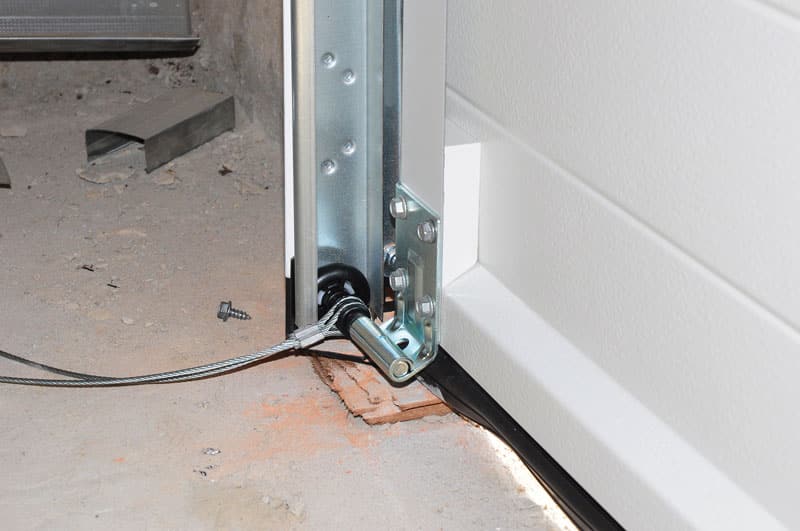
A damaged extension spring, loose cable, or uneven spring tension can cause one side to rise before the other. A crooked door can bind in the tracks and may fall unexpectedly. Do not try to straighten it by hand.
6. The spring has a visible gap, rust, or distortion
A broken torsion spring usually shows a clear separation in the coil. Surface rust, stretched coils, and misshapen areas can also signal deterioration. A technician can identify the correct replacement based on door weight, height, drum size, and lift system.
7. The door closes faster than normal
A weakening spring may no longer control the door's downward travel. The door can feel less smooth, slam near the floor, or become difficult to hold at the halfway point. Treat a change in speed or balance as a safety issue rather than an inconvenience.
Why professional spring sizing matters
Springs are not selected by appearance alone. Wire size, inside diameter, length, wind direction, door weight, and hardware geometry all affect performance. An incorrectly sized spring can leave the door too heavy, make it rise on its own, or shorten the life of the opener and other components.
During spring service, the complete counterbalance system should be inspected, the door should be balanced through its travel, and the opener's force and safety reversal should be tested after the repair.
Keep the door closed if possible and call Garage Door Service Pro at (720) 513-4343. Tell us whether the door is open or closed, whether any cable is loose, and what you heard or saw.